
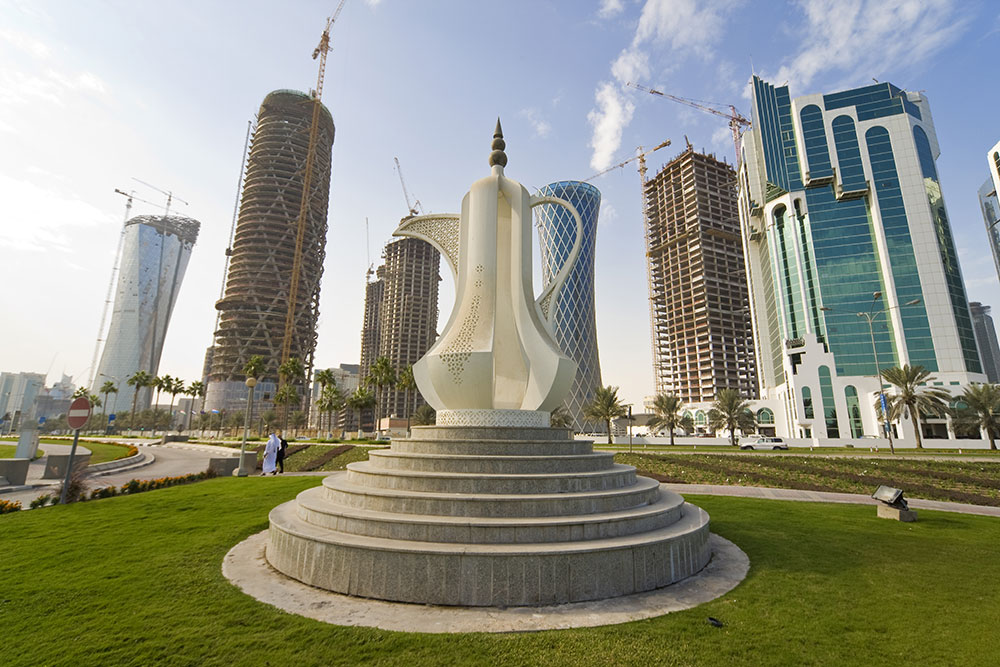
FIFA World Cup 2022 construction frenzy is highlighting already existing issues in the sector.
Multi-million contracts are being awarded almost weekly, with Qatar Rail taking on one of the most comprehensive and high tech rail systems in the region and Public Works Authority, Ashghal, awarding contracts across every discipline within infrastructure, from drainage and sewage treatment, to multi-lane highways – to name a few of the multitudinous projects underway.
A hefty $200 billion has been allotted for infrastructure development, which includes the 2030 Vision, and of which only about $10 billion is apportioned to the World Cup directly. The projects are heating up in an effort to meet the immovable deadlines. Qatar prides itself in being the leading light in the region, the beacon for innovation and style – and rightly so, given the huge advances this small piece of land that constitutes a mere 11,571km² and extends by approximately 160km into the Arabian Gulf has achieved within two generations.
In that time it has moved from Frontier status to Emerging economy and holds the title of the world’s richest country. And herein is the conundrum. The magnitude of the construction boom in Qatar has, along with countless opportunities, brought significant difficulties. While the country streaks ahead on many fronts, inviting engagement with foreign powers and investment from international countries, and encouraging private sector involvement, among other issues, it still has a deficit in a home-grown skilled workforce and bureaucratic red tape that is an ongoing trial for businesses, consultants and contractors alike who are part of the boom.
“$200bn – Infrastructure development budget – $10bn – For FIFA 2022 World Cup allotment”
David Kelly, Executive Director, Quantum Global Solutions, highlights problems around the many JVs formed in an effort for international companies to gain a foothold in the projects: “What we are seeing happening increasingly is that the local JV partner is not able to fulfil its obligations (if it was ever able to) and then puts the foreign partner in a position where it is forced to inject additional funding into a project to cover any shortfall. “Foreign JV partners are now starting to resist this scenario as there is no certainty that they will be able to recover any monies injected from the project. “This is happening at all levels, from head contractors to sub-contractors. Many JVs in Qatar have disputes between the partners and, at the end of the day; there is no single point of responsibility for an employer which, from a practical standpoint, will lead to delays in projects.”
According to a productivity report compiled by the International Quality and Productivity Centre (IQPS): ‘What do Qatar contractors look for in their subcontractors?’, high construction costs, combined with the ongoing shortage of visas for skilled manpower, and a lack of proper capability testing, specifically within the engineering field, hinders the country’s construction growth and also impacts on delivery.
Also, restrictive banking norms could have knock-on effects on Qatar’s construction industry in the near future as the project deadlines converge. Mohamed Sheikh Al Souk, deputy general manager, Construction Development Contracting and Trading Qatar comments: “It is extremely difficult to obtain banking services from local banks because they have raised their requirements in such a way that it is now more difficult than ever.” He continued: “…you are less able to maintain the momentum of your projects through timely payments, material sourcing, etc.” Acquiring visas for the workforce also poses a problem. Al Souk adds: “Ultimately, the shortage of visas combined with a lack of proper capability testing, has led to a situation where construction projects are being delayed due to a shortfall of skilled engineers.”
“One issue that we see often is when the contractual completion date expires; the employer has not dealt with any extension of time claim”
So too, the inclusion of additional clauses in some contracts can make consultants financially liable for several years after the project has been delivered. Nick Smith, partner at EC Harris says: “The protection ranges from performance bonds that are available ‘on demand’ requiring little justification to draw down on, through to strong liability and copyright clauses and damages for late completion.
“For most contractors this is seen as the price for doing business in the Middle East.”
Kelly adds: “With regards to contractors being out of pocket, there is a perception here amongst some employers that the contractor has to finance their project for them. One issue that we see often is when the contractual completion date expires; the employer has not dealt with any extension of time claims but ceases to pay the contractor any monies owing for works completed. “The expectation is that the contractor should pay to complete the project.” While the projects continue relentlessly, the construction industry can only hope that between the final deadline and the present day, that there will be a streamlining of processes and protocols to alleviate the ongoing challenges.
 David Kelly, Executive Director
David Kelly, a Quantum Executive Director, has over 28 years of experience of both local and international construction project disputes; David is an eminent construction industry professional, possessing a background in quantity surveying. In 2015, David was awarded the prestigious “Construction Executive of the Year” award from Construction Week Qatar magazine. QGS is acknowledged as one of the leading management consultancies dedicated to serving the interests of national and international construction and engineering organisations.
Read more INSIGHT articles.
This article was previously published in the September 2015 edition of Construction Week Qatar.