
Construction Week Qatar found the perfect opportunity to pin David Kelly down to discuss his recent award win and ask for comment on a variety of areas within the construction industry generally.
Nominated by managing director, Peter Murphy, Kelly was a little taken aback at finding himself on the CWQ Awards shortlist initially, and was truly at a loss for words when he discovered he won the award.
“These things don’t come alone, there is always a team behind it” he said on the night of the awards and added “I hope it’s my commitment to the industry as a whole that is recognised, more than just working a 10-hour day. You end up living the industry you know, through extra curriculum activities like training and sharing knowledge.”
Indeed, Kelly epitomises the all-round characteristics of the Construction Executive of the Year and the CWQ team congratulates him on achieving this prestigious award. In the words of the judging panel he is “Clearly an ambassador to the construction business regionally”
With about 25 years in the construction industry and part of QGS’ leadership team, Kelly has a solid background in quantity surveying, and as an expert witness within the commercial, contractual, building and project management sectors.
Having worked predominantly in Australia he has also spent time in Indonesia, Malaysia, Vietnam, Singapore, Philippines and Fiji. “I‘ve been working in the Middle East on and off for about ten years, including Qatar, UAE, Bahrain and Iraq, providing contractual, commercial and planning support services to contractors throughout the region” he says and as an afterthought adds, “Oh and in Mozambique.”
“It’s the private sector that is going to have generate the economy going forward; specifically within the non-hydrocarbon sector, in line with Qatar’s goal of attaining independence from its reliance on gas and oil”
With that much exposure to other countries’ construction sectors, CWQ asked what were some of the major challenges he has faced, in Qatar specifically? Kelly has no hesitation saying that the ongoing skills shortage poses the greatest challenge in his area of the business world: “There is a severe skills shortage among the professional staff over here. We’ve had to get people from around the world with similar qualifications and train them up within commercial management and in forensic planning (the core of our company) to a point where they are as good as, if not better than, their peers around the world.”
While Qatarisation is the ultimate goal of the country’s business sector, Kelly points out that barring the company’s Qatari chairman, all staff are recruited internationally. He adds: “We are a multi-national company and the entire staff is imported expertise, from all around the world, as we just don’t have the skills here.”
Training up skills to the level of where they would be on par with what the company requires he maintains, would take too long and he elaborates: “The nature of the work we do is very specialised. Frankly, anyone under the age of 35 who hasn’t been in the construction industry for 20 years probably wouldn’t be able to do the job at the level required.”
Not only bringing in the right people poses a challenge, but keeping them once you have them is also part of it Kelly says and adds, “It’s also finding the right ‘fit’, the right personality. There are a lot of technical people around who are happy to tick boxes; but the most under-rated skill in the profession is imagination and being able to present the work in a coherent manner – this also a skill set that is required.”
As the Prime Minister calls for an increase in private sector involvement, Kelly says that it behoves the private sector to “take more of a role in achieving the 2030 vision. The reason being, it’s the private sector that is going to have generate the economy going forward; specifically within the non-hydrocarbon sector, in line with Qatar’s goal of attaining independence from its reliance on gas and oil.
“There is only so much that the government can do, and there is no one size fits all. There will be a whole raft of different procurement methods, from joint ventures with the government to independent initiatives and international joint ventures.” He goes on to use Dubai as an example where the private sector, through a variety of services (eg banking and finance) is driving the economy.
“It is the rate of change in Qatar that presents the most significant challenge”
He believes to succeed in the Qatari construction sector one must learn to adapt to the local culture and understand that “things are done differently in the Middle East” and that Qatar specifically, is in a transitional stage that, he believes, will see it move to centre stage within the next decade or two Interestingly, contrary to the general consensus that Qatar’s bureaucratic red tape has the private sector bound, Kelly states, “I don’t know if the red tape here is any worse than anywhere else” and adds with a degree of incredulity, “Having worked around the world and in Asia in particular, if you want to see red tape, try India or China!” He continues: “It might be ‘different’ but it’s not bad” and adds almost in mitigation, “however, it doesn’t help…”
An ongoing challenge that contractors cite is that of cash flow but Kelly maintains that while “it is always a challenge in this environment, it is getting better. Over the past 18 months I can see a subtle shift that I think is owing to the industry maturing and becoming more experienced”. He explains further: “One of the issues with cash flow has always been that the employers were nervous and fearful that they were being ‘ripped off’. However, they are developing greater business savvy and while there is an element of ‘cowboyism’ out there, it’s not as bad as they think and it is manageable, with government organisations like Ashghal creating the change in mind-set.”
Qatar’s construction boom is not going to end any time soon, he believes: “Compared to the rest of the world, for the next two to five years, Qatar is just going to keep going, driven by the generally good economy. In spite of oil prices, the commitments that the government has made to meet its 2030 Vision have to be fulfilled and, more immediately, those around the 2022 World Cup.”
He adds that meeting those commitments may require that “some of the more grandiose projects be put on hold or cancelled” but to his mind, the infrastructure projects “that form part of Qatar’s legacy aspect will continue on, especially those of the Four Pillars of the 2030 Vision”.
Addressing the current construction boom and moving forward after 2022, Kelly comments: “It will be interesting to see what happens post-2022. One of two things could happen: if Doha goes the way of Dubai, it will become a self-sustaining economy, on a good solid scale.
“On the other hand, you could get to 2022 and find that the majority of the infrastructure projects that are needed to meet the 2030 vision have been completed, in which case, there could be a slowdown.”
“The volume and the unique nature of the projects and the speed at which they are required is going to test the industry over the next few years”
Talking about slowing down, speed of project rollout comes to mind and he remarks: “There is always a haste aspect around projects as they tend to start too early. There doesn’t seem to be enough design or enough thought in these projects and they tend to be rolled out far too quickly,” he observes.
“What we are finding with a lot of road projects for example, is that Ashghal is awarding contracts without having control of the land,” he says and continues to explain that to build a road a corridor is needed which usually has private property on either side. “What normally happens in most countries, is that the road authority would make sure they control the road corridor. But they [Ashghal] are awarding contracts and they haven’t finalised the corridor with the road authority, so we are experiencing delays as a result. It’s because they are not organising it before they build it – they are not controlling the land.”
In conclusion he notes: “It is the rate of change in Qatar that presents the most significant challenge. The volume and the unique nature of the projects and the speed at which they are required is going to test the industry over the next few years.”
Kelly, who has appeared as a guest columnist for Construction Week Qatar on a number of occasions, has also written and published several books and articles on construction-related topics and among his achievement he can include extensive hands-on experience in construction cost management, prolongation and delay cost analysis, project management, procurement advisory, professional practice management as well as remote and developing country procurement and risk management strategies.
He holds a Bachelor of Building (Construction Economics) (Hons) and is a fellow of the Australian Institute of Quantity Surveyors and an associate of the Institute of Arbitrators and Mediators of Australia.
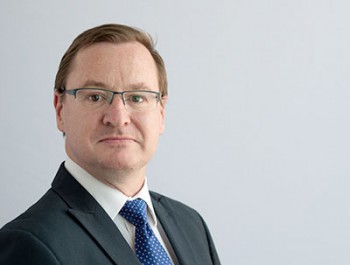 David Kelly, Executive Director
David Kelly, a Quantum Executive Director, has over 28 years of experience of both local and international construction project disputes; David is an eminent construction industry professional, possessing a background in quantity surveying. In 2015, David was awarded the prestigious “Construction Executive of the Year” award from Construction Week Qatar magazine. QGS is acknowledged as one of the leading management consultancies dedicated to serving the interests of national and international construction and engineering organisations.
Read more INSIGHT articles.
This article was previously published in the October 2015 edition of Construction Week Qatar