

Quantum Executive Director, Steven Beaumont, continues to look at the game of football and how Qatar’s construction industry may have more in common than the World Cup.
Over the past few months I have written about construction, football and how there are similarities between the two. I mean let’s face it, both are a game and I would suggest construction is more of a game than football. In my last article we looked at records and the importance of these irrespective of the industry you work in. So let’s now consider risk. What is it?
During a quick Google search about 350,000,000 results (in 0.47 seconds) were found for the term ‘risk’. It is also defined by the Oxford Dictionary as ‘a situation involving exposure to danger’ or ‘the possibility that something unpleasant or unwelcome will happen’. Wikipedia reference risk as ‘the intentional interaction with uncertainty’ while ‘risk perception’ they suggest ‘is the subjective judgment people make about the severity of a risk’. But, put even more simply, risk is all about an event occurring which will have an impact on something else, the impact could be a time or a financial impact or both.
So controlling risks is both an art and a science but how do we measure the level of risk and the impact of a risky event occurring? In some scenarios there are simulators which attempt to predict the likelihood of a risk event occurring and the impact it would have. One simulator which springs to mind is called ‘Monte Carlo’ but since this place is in Monaco and is more prevalent to car racing than football we shall leave this for a while and concentrate our efforts on football and construction.
“During a quick Google search about 350,000,000 results (in 0.47 seconds) were found for the term ‘risk’”

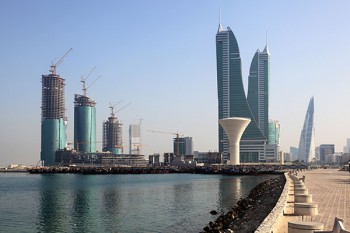
First of all I want to consider risk in the construction industry for a moment; I want you to think about employing a carpenter to do an electrician’s job. Perhaps the carpenter says he can do the work and perhaps you believe him? The issue is we all know the outcome won’t be good. Effectively, while this construction is in a home scenario, this is risk and controlling risk allocation.
Now, turning to football. As I write and as you read, the worlds’ most eminent football managers will be selecting their players for the World Cup games currently underway in Brazil. As I write, the tournament has kicked off and I can already say there has been some luck and good risk management in a number of games!
I want to explain how risk events happen and how they can be better managed. We all know Pele; he was mentioned in my March article. Pele was a world class striker; he proved his talent at the age of 17 and become an iconic household name let alone a football player. So, for a moment think about a manager who decides to play Pele in a defensive role instead of attack? It wouldn’t work would it? Why wouldn’t it? Well it’s because we know where his skills are, we know where to play him and the risk of losing the game would be reduced. Swapping his position with a defender and expecting the defender to score would increase the risk of losing the game for the team. So, assessing and managing the risk is about using skills correctly to best manage the risk. We see that Pele’s manager has done the correct job of allocating and controlling risk. Not difficult is it?
Let’s now think about the World Cup stadiums which are being built in Qatar. Is the risk allocation correct? Probably not.
You see good risk management is about planning and allowing the person, or company, best suited to control the risk to manage it. In a similar way to our friend Pele and the defender, we wouldn’t want a surfacing company who specialise in laying tarmac to pour the concrete would we?
So why is it that the organisations who want something built and the companies who build it, sometimes get risk allocation wrong?
“Controlling risk is both an art and a science and how we measure the level of risk and the impact of a risky event occurring”
Often I see construction contracts where the risks of events occurring which have both time and money implications are passed down the line to the contractor or subcontractor who, quite frankly, cannot manage them because it isn’t within their skill set. Equally I see the organisations that are paying for the project, for example the stadium, or road, retaining risks and this isn’t correct.
In the interests of delivering a project safely and to both time and budget constraints (and risks) we should be thinking about how football is played and the simple calculation used there to allocate risk. As I said earlier, don’t play a player in the wrong position, if you do you would run the risk of losing.
No one wants to lose and if we are honest no one wants to see anyone else lose either; so if we can refer back to the team who will deliver the Qatar World Cup 2022 we should have this in mind. In addition to playing a game which Pele would be happy with, in addition to world class safety, and in addition to keeping records of how we build stadiums we must ensure risk allocation is carried out correctly so the organisation best suited to manage the risk is appointed and delivers the project with risks controlled.
If we don’t manage risks, then the risk will occur and the organisation charged to deal with it won’t be able to. This will mean the risk will have an impact on cost and time and will probably result in a dispute. We discussed disputes last time, and we don’t want these. To deliver the Qatar World Cup 2022 is simple, among the other key factors just make sure the allocation of risk is correct.
 Steven Beaumont, Executive Director
Steven Beaumont, a Quantum Executive Director, is a member of the Royal Institute of Chartered Surveyors and the Chartered Institute of Arbitrators. Steven has over 20 years of experience in both local and international construction project disputes and regularly delivers construction claims classes and lectures to industry professionals throughout the GCC. QGS is acknowledged as one of the leading management consultancies dedicated to serving the interests of national and international construction and engineering organisations.
Read more INSIGHT articles.
This article was previously published in the July 2014 edition of Business@Qatar Magazine published by the Gulf Times Newspaper