

Quantum Executive Director, Steven Beaumont, concludes his series of discussions on construction, teamwork, record keeping and football all fit together.
In December of 2014 I wrote an article which was titled, ‘The Final Whistle’. This is ‘The Final Whistle – Part 2’. It isn’t uncommon when movies are made for there to be a sequel and I guess this is my sequel, and unfortunately this sequel is my final article for the moment. I hope you have enjoyed the series, the issues I have discussed, and the examples of problems I have experienced on construction projects.
I have enjoyed writing about and sharing my experiences with you on construction disputes, I have particularly enjoyed comparing construction to football and this has made me realise a few things. The first is that whilst we are professional and provide a professional service, we shouldn’t take life too seriously. Secondly, there are a lot of construction problems and disputes out there. These problems are not confined to Qatar; they spread through the GCC and the world for that matter. The thing is, the problems are fairly common and it seems that the problems are allowed to fester and become disputes. Perhaps the contractors and clients out there should not take life so seriously, be friends and sort it out quickly. Construction problems occur regularly and thinking about how a construction project is managed and how a football team is managed are not too dissimilar.
“There are a lot of construction problems and disputes out there and the problems are not confined to Qatar; they spread through the GCC and the world for that matter”
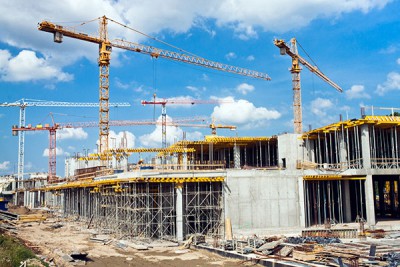

I am of the firm belief that both clients and contractors are equally responsible for construction problems. For example, the client’s designers don’t complete the design sufficiently well and rely on the contractor to complete the design through shop drawings. This is wrong. The contractor is not a designer, he is a builder so let him build. The designer is the designer so let him complete the design. It’s simple. Turning to the contractor, he doesn’t resource the project sufficiently well and sub-lets work to sub-contractors who have insufficient and sometimes unskilled labour performing a skilled job. Again, this is wrong.
If you remember back through my articles we discussed a number of examples where the contractor and the client were in dispute. For my final say, I suggest the procurement process, the design management and the use of correct skilled labour are addressed so that projects are built more efficiently and with less disputes. You see the equation is simple, follow what I have said and the client will get the project for a more economic price and probably on or near to the agreed time to complete, and the contractor will complete the works making a higher profit. Win – team work, not science, but similar to football.
I would suggest that now we are aware of construction problems, we are aware of how construction problems can easily turn into disputes and we are aware that to manage and settle the disputes is a very expensive avenue to pursue. I know we mentioned extensively the importance of records and how these are used as evidence to prove a particular issue has caused a delay. If we can all take away some small lessons it would be:
- Work as a team
- Take records of what you do and why, and
- Try to avoid disputes, they are expensive!
If however, the dispute is unavoidable remember what I said in August of 2014. A picture tells a thousand words and research also highlights the fact that 90% of the information transmitted to the brain is visual and our brain processes visuals 60,000 times faster than text. Hence the popularity of watching football on TV rather than reading about it, the same can be said about settling construction disputes – watch my movie about the dispute on the television it tells many thousands of words.
With the start of the New Year the Qatar World Cup 2022 is less than six years away, let’s work together as a team and make it our goal to get the stadiums complete and the infrastructure to accommodate the tournament ready before the final whistle.
“I am of the firm belief that both clients and contractors are equally responsible for construction problems”
 Steven Beaumont, Executive Director
Steven Beaumont, a Quantum Executive Director, is a member of the Royal Institute of Chartered Surveyors and the Chartered Institute of Arbitrators. Steven has over 20 years of experience in both local and international construction project disputes and regularly delivers construction claims classes and lectures to industry professionals throughout the GCC. QGS is acknowledged as one of the leading management consultancies dedicated to serving the interests of national and international construction and engineering organisations.
Read more INSIGHT articles.
This article was previously published in the December 2015 edition of Business@Qatar Magazine published by the Gulf Times Newspaper